When you purchase commercial insurance to protect your business, you expect to be able to rely on your coverage. Through fire, flood, theft or other damaging events, your insurance policy is a contract you should trust. What happens when your commercial insurance company decides to deny your claim?
Insurance Companies Don’t Expect You to Fight Back
Most insurance companies process claims expecting that the business on the receiving end of a denial won’t try to fight it. They may attempt to minimize your claim or narrowly interpret your policy to refuse your claim. Without understanding your policy, your rights and the steps you can take to fight back, you may find yourself throwing your hands up or wanting to simply throw in the towel.
What to Do After Your Insurance Claim Is Denied
If you’ve received a denial for a commercial insurance claim, it doesn’t necessarily signify the end of the line. There are several steps you can take to fight back, ensuring you do everything in your power to pursue your claim.
Understand why your claim was denied. It’s important to read the notice you receive carefully to outline the reasoning behind your insurance company’s decision. For instance, they may dismiss your claim because you failed to submit it on time, the event you’re seeking coverage for isn’t a covered loss or they believe your claim is fraudulent.
Examine your policy. Carefully examine your policy for covered events, time limits and procedures.
Write an appeal. If you can’t find any indication as to why your insurance company denied your claim, you can choose to write an appeal letter. Use the space to outline your argument based on your policy and provide any supporting evidence. The appeal you write may make or your break your ability to receive reimbursement, so you may want to work with an attorney to draft as persuasive of an appeal as possible.
Move forward towards litigation. If the company still denies your claim that you believe your policy covers, you can choose to sue your insurance company. Consider calling a professional commercial insurance attorney to help you decide if this is the next best step for you.
You Don’t Have to Accept an Insurance Claim Denial
Most business insurance claims involve loss, whether monetary, physical property or both. If your claim is denied, you don’t have to simply succumb to your losses. To learn more about fighting back after a claim denial, send us a message.
Author: Fell Law Firm
-

Commercial Insurance Claim Denial: How to Fight Back
-

5 Reasons You Can Lawfully Evict a Tenant
More than 100 million Americans rent their homes. And it’s estimated that approximately one million individuals are evicted each year.
As a landlord, you have the ability to evict your tenants, but you must have a lawful reason to do so.5 Reasons You Can Lawfully Evict a Tenant
You can’t evict a tenant simply because they made you angry or due to discrimination. You must have a lawful reason, such as the ones below, to evict a current tenant.
1. Illegal Property Usage
If the tenant is using your property for illegal use, you can likely evict. For example, the tenant might be using your property for business purposes, when it’s strictly for residential use. On the other hand, tenants who have used your property as a place to distribute illegal substances can also be lawfully evicted.
2. Safety Concerns
You can also lawfully evict a tenant if your property has a safety issue that must be fixed or a health concern that can be damaging to the tenant. For example, structural concerns or faulty wiring can be reasons that eviction is required for the safety of those who live on the property.
3. Intention to Withdraw Property From the Market
If you’re planning to withdraw your property from the market, you can most likely lawfully evict. In Texas, landlords are required to give tenants who pay month-to-month rent a 30-day notice to move. But, if the tenant is on a fixed-term payment, the landlord must wait until the end of the term to evict.
4. Rent Nonpayment
A tenant who refuses to pay their rent can be evicted without question. In Texas, if a landlord is terminating the rental agreement with cause, they must give the tenant a three-day notice to vacate the property. This can be done without offering the tenant the option to pay the past due rent.
5. Violation of Lease
Does your tenant have a pet even though your rental agreement states they can’t? This is considered a violation of lease and eviction is now an option for you. Other similar violations include unapproved occupants, nuisance complaints and even property damage.
Ready to Move Forward With the Eviction Process?
As a landlord, it’s important to consider reaching out to a professional attorney who can guide you in the next steps to take. Your tenant has the ability to fight the eviction, resulting in a detailed legal process for you. To learn more about the eviction process, send us a message.
-

Ride-Sharing Car Accidents: Understanding Your Rights
Ride-sharing is becoming one of the most popular methods of transportation around the world. But, as ride-sharing increases in popularity, so do ride-sharing accidents. In fact, Uber and Lyft have both been linked to traffic fatalities in the past few years. If you are injured in a ride-sharing accident, it’s important to understand your rights.
Ride-Sharing Regulations in Texas
In 2017, Governor Abbott signed a bill into law that restructured ride-sharing regulations for the entire state. Some of the key takeaways include:
- Mandatory criminal background and driving history checks for all drivers
- A zero-tolerance policy for intoxicated drivers
- The requirement of a permit from the Texas Department of Licensing and Regulation with an annual fee of $5,000 for ride-hailing companies to operate across the state
These regulations were put into place to help create safe travel methods for all ride-sharing customers, regardless of the company.
Understanding Who’s At Fault in a Ride-Sharing Accident
As a passenger in an Uber or Lyft, it’s important to understand who’s at fault for any injuries you sustain if you’re ever involved in a ride-sharing accident. In general, the fault lies with either the third-party motorist could be at fault or the ride-share driver.
This means that the third-party’s insurance company or your driver’s liability policy would cover your injuries. Texas requires ride-sharing drivers to have 50/100/25 coverage when their ride-share app is on, equaling $50,000 for each injured passenger, $100,000 per accident and up to $25,000 in property damage.What Do You Do After an Accident?
If you’re involved in an accident as a ride-share passenger, call the proper authorities and seek medical attention first. Next, both Lyft and Uber require you to report the accident so they can take the proper next steps. You can report an accident online or reach out to the companies via phone to file a report.
Injured in a Ride-Sharing Accident?
If you’ve been injured in a ride-sharing accident, it’s important to remember that you deserve to be compensated for those injuries and the effect they’ve had on your life. Consider hiring a professional attorney to help you navigate the ride-share accident claim process. To learn more about ride-sharing in Texas, send us a message.
-

Do You Have a Valid Bad Faith Insurance Case?
When the unknown happens around you and your family, you should be able to rely on your insurance company to hold up their end of the deal. Sometimes, insurance companies deny or delay valid claims, also known as acting in bad faith.
What Does Bad Faith Insurance Mean?
We purchase insurance to help protect our families, homes and businesses from the unexpected. The insurance company creates a policy, or a contract between you and the company, requiring you to pay a premium in return for their promise to insure.
But, some insurances may decide to deny or delay necessary payment for your valid claims, acting in bad faith. When insurances refuse to pay what they promised, you could be left with costly damages, health concerns and more that you simply can’t handle alone.Examples of Bad Faith Insurance Claims in Texas
Bad faith insurance claims can include a wide range of types including fire, tornado, automobile, life, homeowner’s and so much more. For example, your insurance may decide to deny your car accident claim, even if it’s covered in your policy. Or, the insurance company may purposely delay investigating the damage to your home after a storm.
According to Texas law, there are certain acts that insurance companies should not commit including:- Misinterpreting or failing to communicate provisions to insurance policies relating to coverage
- Failure to promptly acknowledge claim communications
- Failure to execute prompt and fair settlements of claims once liability is clear
- Failure to execute prompt investigation of claims
If you’ve experienced an unnecessary denial in your claim or a delay in the investigation of your claim, you could be eligible for compensation and damages. Bad faith insurance claims require skilled attorneys to ensure success. You might consider reaching out to an attorney for proper counsel prior to moving forward on your own.
Do You Believe You Have a Bad Faith Case?
After paying your premiums, you deserve an insurance company that you can count on. If you believe you have a valid bad faith insurance claim, you shouldn’t wait to act. To learn more about your bad faith case, send us a message.
-

Vandalism & Law: Everything You Need to Know
From spray paint graffiti to extreme property damage, vandalism is a commonly committed crime throughout the United States. In fact, in 2017, approximately 7,694,086 cases of property crimes were reported. Whether you’re a business owner, homeowner or a landlord, it’s important to understand your rights when it comes to vandalism.
What Is Vandalism in Texas?
In Texas, vandalism falls under the term “criminal mischief” which covers a wide range of acts. According to the Texas Penal Code, a person commits an offense by:
- Intentionally or knowingly damaging or destroying the tangible property of the owner
- Intentionally or knowingly tampering with the tangible property of the owner and causing pecuniary loss or substantial inconvenience to the owner
- Intentionally or knowingly making markings such as paintings and drawings on the tangible property of the owner
Often, criminal mischief is difficult to prove with defendants stating the act was by accident or mistake. Intent must be proven, showing that the defendant acted for the purpose of destroying or manipulating the property.
What Are the Penalties for Committing Vandalism in Texas?
In Texas, the penalties for committing an act of vandalism will depend on the damage involved. For example, if the amount of pecuniary loss is less than $100, a class C misdemeanor is in order. Penalties range from class C misdemeanors to serious felonies of the first degree. Involved in each is the possibility of jail or prison time plus necessary fines.
Are you the owner of property that has been vandalized? Take the time to document the damage by taking thorough photos. You can also ask neighbors or nearby businesses for statements from those who witnessed the act. If severe property damage has occurred, reach out to the authorities for the proper filing of a police report. Finally, consider reaching out to an experienced attorney to help protect your rights.Has Your Property Been Vandalized?
Property damage through vandalization is often difficult to manage alone, especially if the damage is great. But, you don’t have to. To learn more about vandalization and what steps you should take next, send us a message.
-

What Rights Do You Have as a Tenant
In Texas, both landlords and tenants have rights under the law. That’s why it’s usually best to put the terms of your lease in writing, so that everything is as clear as possible. If problems do arise, you’ll be able to look to your lease to help resolve them.
Although some landlords prefer to not put the terms of a lease in writing, it is more common, and safer for both parties to do so. The law protects the following rights for tenants.Peace and Quiet
In disputes with neighbors, your landlord can be your best ally. For example, if you are having problems with your neighbors or the tenants upstairs for example, your landlord can intervene and talk to them about their unacceptable behavior. If things get worse, the landlord may be able to evict the problem tenants, allowing you to enjoy peace and quiet in your home. And most likely, neighbors who are a problem for you, are a problem for your landlord.
A Safe Place to Live
Generally, your landlord cannot turn off the utilities, like gas, electric or water unless he is making repairs, doing construction or there is an emergency. In non-emergency situations, the landlord will let you know in advance when the repairs will take place so you can prepare.
Additionally, most landlords want to know when there is an unsafe condition on the property. Not only does it protect you, it protects your landlord from expensive litigation if you’re injured. Keeping the property in good and safe condition also improves the property’s value. If the condition is due to normal “wear and tear” your lease will state who is responsible for repairing it.
In the event the landlord refuses to repair any condition that affects your health or safety, you may have legal options in justice court. We can assist you if your landlord fails to make repairs or violates the terms of your lease.Security and Fire Alarms
In most buildings, the Texas Property Code requires specific security devices, including:
Window latches
Keyed dead bolts on the outside doors
Security or locks on sliding doorsThe landlord must provide smoke detectors as well. Additionally, the law also requires that you, as a tenant, do not disable or disconnect the smoke detector. You cannot waive your right to have one installed in your home or apartment. This is a safety feature that protects everyone in the building, not just your own family.
We Can Help if Your Landlord Won’t
If you’re unable to resolve disputes with your landlord, contact us to learn how we can help you. We’ve helped tenants resolve issues quickly and inexpensively in most cases. Contact us today to make an appointment.
-

When Your Health Insurance Company Won’t Pay For Your Care
If your insurance company notifies you that it won’t pay for care that your doctor says you need, it can be frightening. It’s almost overwhelming to think about trying to fight them. You’ve paid for insurance and worked hard to make payments on-time. Health insurance premium payments are one of the biggest expenses that most people have after paying their mortgage.
You can fight back, and you do have rights. If you can show that your insurance company denied your benefits in “bad faith,” you may be able to sue the insurance company for additional damages in addition to making them pay for your care.What Does “Bad Faith” Mean?
Bad faith means an insurance company is unreasonably withholding payment for coverage that you’ve paid for. An insurance policy is really a contract between you and the insurance company. You are required to pay your monthly premiums in exchange for the security of knowing that the company will pay for claims. This concept is true whether the policy covers your car, your house or your health.
When you keep your end of the bargain by paying your premiums, but the insurance company doesn’t, that’s just wrong. If they look for a way to avoid investigating or paying a legitimate claim, they are acting in bad faith under the law.
Should My Policy Cover My Care?
That’s one of the first things we’ll investigate. Every policy is different and covers—or excludes—care that you may not realize is excluded. That’s why it’s important to consult with a lawyer familiar with these claims as soon as possible. However, there are certain basic coverages that federal law now requires in every policy:
- Coverage for pre-existing conditions
- Preventative care without charge
- Expanded coverage for young adults
How Can a Lawyer Help?
In some cases, when a lawyer gets involved, the insurance company starts to take your case more seriously. Often, we can resolve the situation by contacting your insurance company and reminding them what the law says. In these cases, the insurance company can avoid a bad faith claim by paying for your care as it should have from the beginning.
In other cases, if the insurance company denies your claim, we can file a bad faith lawsuit against them. If we determine that the insurance company acted in bad faith, we must prove that they withheld your benefits and that they acted unreasonably by doing so.Contact Us for Help
We can help you recover not only the benefits to which you are entitled, but additional compensation for your financial losses and pain and suffering. Contact us to learn more about whether you may have a Bad faith insurance claim and how we can help you.
-

What Happens When a Car Accident Is Your Fault?
Often, car accidents occur so fast that it’s hard to decipher who is truly at fault. However, have you been involved in a car accident that you’re certain you caused? And if there are consequences, what will they be? If you’re at fault for the accident, there are a few things you must consider.

Auto Accidents in Texas
Unlike other states, Texas does not require drivers to carry no-fault insurance. In Texas, you must be covered by liability insurance which is a policy that covers both injury and property damage during an accident. If the car accident is found to be your fault, you are responsible for the injured parties’ medical care and any property damage.
The liability insurance must at least cover a minimum of $30,000/$60,000 for bodily injury and $25,000 for property damage. However, purchasing an insurance policy that covers more than this minimum is a great choice to avoid issues in the future.Consequences for Being At Fault in a Car Accident
After the accident, the other driver will need to submit a claim through his or her insurance company. However, the insurance company will contact your insurance company for reimbursement on the claim. Unfortunately, your insurance premiums may increase after your policy renews due to your accident.
Was the accident caused by distracted driving? If you receive a citation as a result of the accident, such as a citation for texting while driving, you may see an increase in points on your driving record. If this occurs, it’s a sure sign that you should expect a higher premium after renewal.
If the insurance company and the other driver can’t reach an agreement about the claim, they may pursue a lawsuit for damages. It’s important to contact a professional attorney to advise you on next steps after an accident occurs.Are You At Fault for a Recent Car Accident?
If so, you need proper representation to guide you. All car accident cases in Texas are different, making it difficult to navigate on your own. To learn more about Texas auto accident laws or to seek representation for your accident, send us a message!
-

Commercial Insurance and Smoke Damage: Is It Covered?
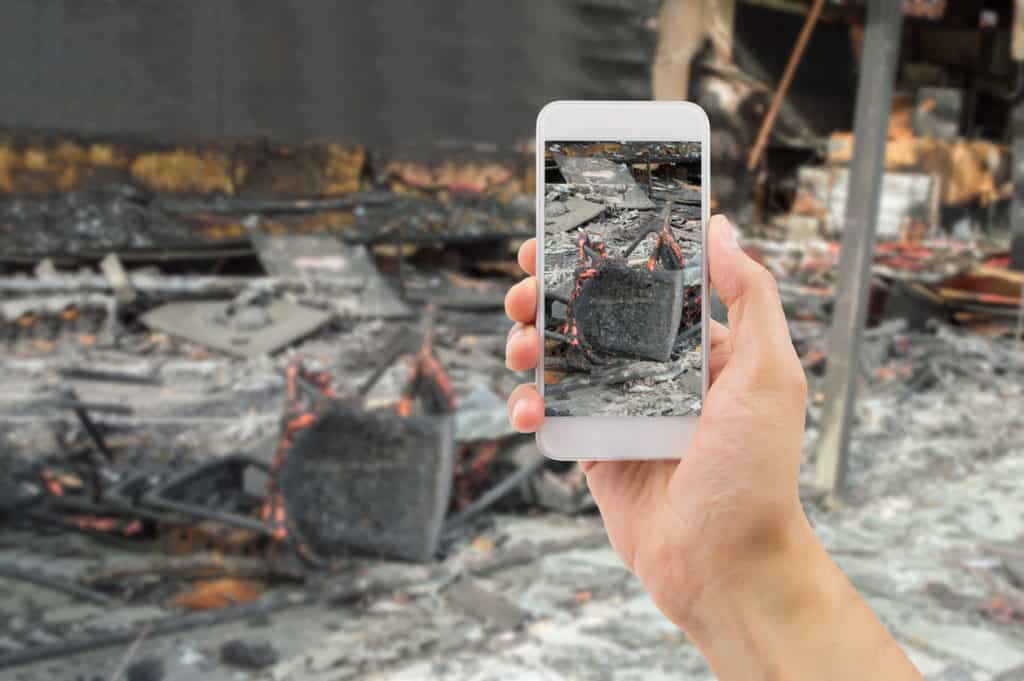
Have you experienced smoke damage due to a fire within your commercial business? Or, did a fire in the business next door cause smoke damage to your property? If so, you might be wondering if your commercial insurance policy will cover proper cleaning and maintenance. Rest assured, most smoke damage is usually considered a covered loss.
Steps to Take After Smoke Damage Occurs
Smoke damage can reduce the quality of air within your business. It’s important that you take the necessary steps to help remove the smoke damage from your building.
- Call your insurance company: At the first sign of smoke damage, call your insurance company. You’ll want to make sure smoke damage repair is covered in your policy prior to moving forward.
- Consider professional cleaning or remediation: Professional restoration and cleaning companies can perform remediation to clear your business of smoke. Due to the danger of smoke, it’s best to leave this to the professionals, instead of trying to do it yourself.
- Check your safety measures: Now is a great time to check smoke alarms, carbon monoxide detectors, and fire extinguishers to ensure they’re up to date and working properly for future occurrences.
What Can I Do If My Insurance Acts in Bad Faith?
Even though fire and smoke can be detrimental to your business, some insurance companies may still take steps to deny or delay paying your claim, acting in bad faith. In some cases, insurance companies may assume arson is the cause, refusing to pay the claim. If this happens to you, a professional attorney can help you protect your rights.
Your insurance policy is a contract between you and the insurer. And even though insurance companies believe most individuals will not fight their decision, a lawyer can make all the difference in recovering assistance for the damage.Has Your Business Experienced a Fire or Smoke Damage?
You shouldn’t wait to seek out help. Smoke damage can be harmful to your employees and the customers that visit your business. Call your insurance company and reach out to a professional for help. If your insurance company has refused to pay, let us help by sending us a message today!
-
What is a Landlord’s Lien in Texas?
Of all the issues that can crop up between a landlord and a tenant, there is no question that rent payments are one of the most common. Sometimes, a tenant withholds rent payments for a valid reason, like a dangerous condition that has gone unrepaired. Other times, the rent goes unpaid without a valid reason. The Texas Property Code has its own way of dealing with payments for rent owed, called a landlord’s lien.
Defining “Landlord’s Lien”
Essentially, a landlord’s lien is a clause written into the lease that allows a landlord to take possession of certain property inside a tenant’s apartment as payment for rent owed. In order to be effective, the Landlord’s Lien must:
- Be included in the lease
- Be written in bold print or underlined
Can a Landlord Seize All Property in the Tenant’s Apartment?
The short answer is no. Texas law lists a variety of items that a landlord cannot seize and sell to satisfy unpaid rent. Examples include:
-
- Clothing, tools, or books related to a profession
- School books
- Family pictures
- Beds and bedding
- Kitchen furniture, appliances, and utensils
- Food, medicine, and medical supplies
- Children’s toys
- Items the landlord knows belong to someone other than the tenant
Additionally, while landlords are allowed to seize and sell furniture, the landlord cannot take everything. The tenant must be left with at least one sofa, two living room chairs, and a dining table and chairs.
What is a Landlord Required to Do to Exercise a Lien?
There are some rules landlords must follow if they choose to take a tenant’s property using the landlord’s lien.
- The landlord can only take the property when the tenant is not at home.
- The belongings must be inside the residence or in an attached garage, storage room or shed.
- After taking items, the landlord must leave a notice explaining that they entered, along with an itemized list of everything that was taken.
- The notice must include the amount of overdue rent, plus the contact information for who the tenant should contact about the amount owed. It must also state that the property will be returned when the rent is fully paid.
Can a Tenant Get the Property Back?
Tenants can get all the property back any time before the landlord sells it by paying all rent due. In situations where the landlord sues the tenant for unpaid rent, the tenant can still get the property back before a judgment is rendered.
When Can a Landlord Sell the Property?
Landlords must give tenants 30-day’s notice of any sale. The notice must be sent via certified mail and must provide the date, time, and place of the sale, a person to contact about the sale, and the amount of money owed. If the tenant fails to pay rent before the sale, then the landlord can sell the items. The money gained must be applied to the unpaid rent. And, if the sale generates more money than was owed, the extra must be sent to the tenant.
Questions About the Lien? Reach Out to The Fell Law Firm
The landlord’s lien in Texas can be difficult to understand. Do you still have questions about the landlord’s lien? Reach out to The Fell Law Firm today by sending us a message.