Blog

  • 5 of the Most Common Car Accident Causes

    5 of the Most Common Car Accident Causes

    Our roads are hazardous, yet all of us depend on them. Perhaps if we were more aware of both our own behavior and that of other drivers, we could avoid falling into some of the bad decisions that frequently lead to crashes.

    Four out of five of the causes we cover here have to do with driver decision-making. Although unfortunate, this can mean good news. If driver behavior makes roads dangerous, improving driver behavior could make roads safer for us all.

    1. Distracted Driving

    Each day in the US, approximately nine people are killed and more than 1,000 injured in crashes reported to involve a distracted driver. Of all the different types of distractions, texting while driving is the most common and one of the most dangerous.

    Drivers who text while driving are 23 times more likely to be involved in a wreck. Texas is one of the many states where texting while driving is illegal. But other types of distracted driving, including eating, using infotainment systems and talking to passengers are very common and just as dangerous.

    2. DUI/DWI

    Alcohol and drugs reduce driver reaction times, impair decision-making and affect a driver’s vision, all of which make the driver much more likely to crash. According to the CDC, 29 people die every day in the U.S. in motor vehicle accidents involving alcohol. This amounts to one death every 50 minutes.

    3. Speeding

    Around 31% of all traffic deaths are the result of speeding. It’s such a major problem in America that some agencies, including the National Highway Transportation Safety Administration, have argued that the penalties for speeding should be just as severe as the punishments for DUI.

    In Texas, a first offense DUI comes with heavy fines plus a driver’s license suspension of up to a year, according to the state Department of Transportation. Speeding rarely has punishments that severe, except in very egregious situations.
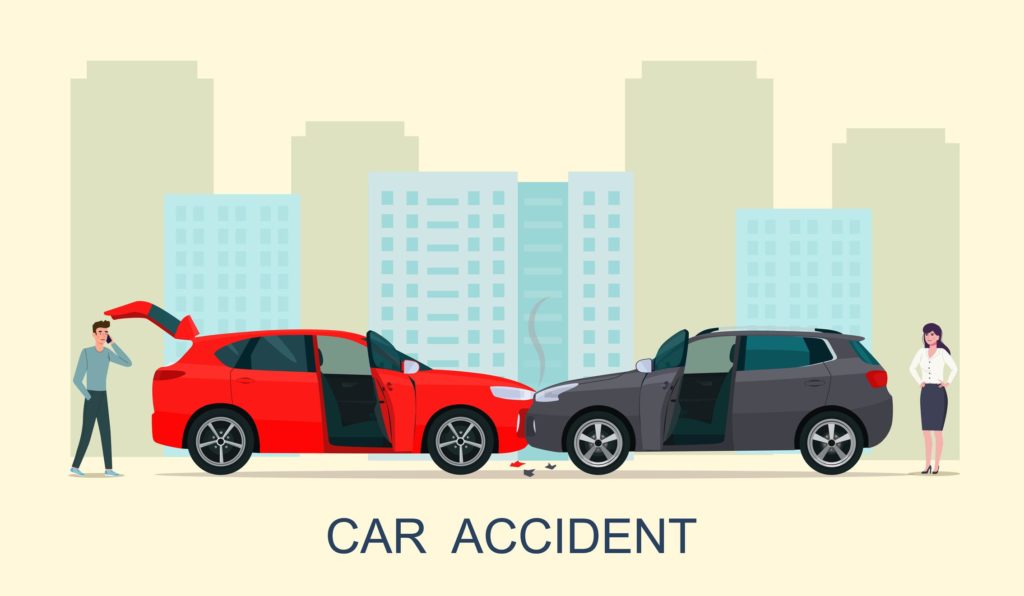
    5 of the Most Common Car Accident Causes | The Fell Law Firm | iStock-1199392953
    972-450-1418 – Many car accidents are the result of five common causes. What are they and can they be prevented? Learn more by visiting us today.

    4. Reckless Driving

    Reckless driving can mean running a stop sign or red light, tailgating, drag racing, doing burnouts, driving while intoxicated, excessively speeding, or doing any other kind of driving act that shows a disregard for the safety of others. Reckless driving causes thousands of serious injuries and deaths every year.

    5. Bad Weather

    Bad weather is the only thing on this list that isn’t directly the result of a driver’s actions. After all, no one can control the weather. The Federal Highway Administration says that roughly one out of every five car accidents are related to weather conditions.

    Rain, hail, fog and strong winds make driving much more hazardous. If you’re ever caught in bad weather, try to give yourself some extra time to get where you need to go, slow down, and be even more cautious than usual.

    Our Dallas Car Accident Lawyers Investigate all Crash Causes

    If you were hurt by someone else’s negligent or reckless driving, you deserve compensation. The car accident attorneys at The Fell Law Firm know how to investigate crashes and determine the true cause. We invite you to contact us today to arrange a free initial consultation to discuss your injuries and how we may be able to help.

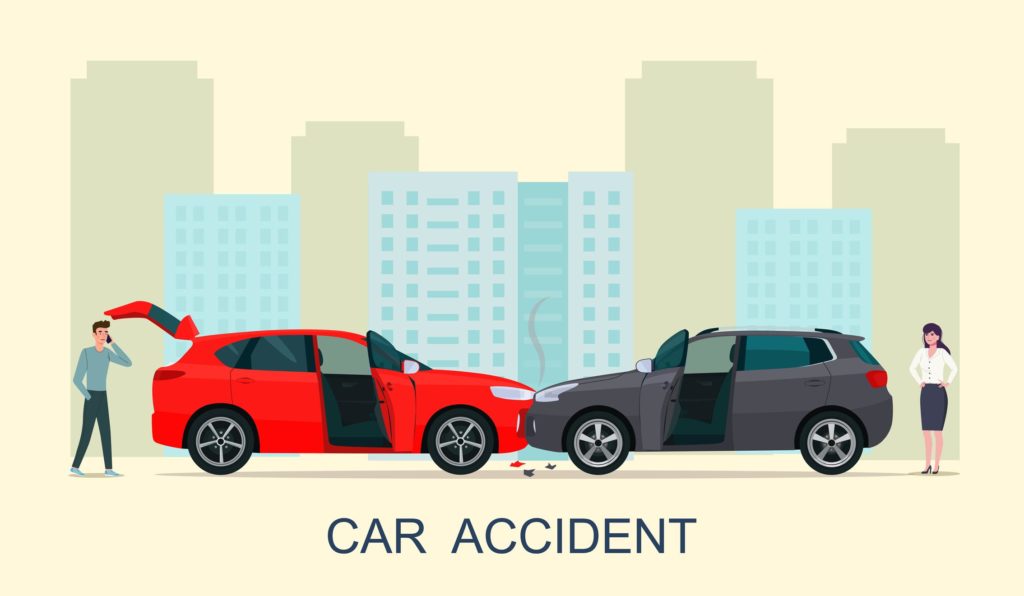
  • Most Car Accidents Happen in These Places

    Most Car Accidents Happen in These Places

    When most of us think of car accidents, we often think of a crash on a crowded highway. Although accidents happen every day on Texas highways, they’re far from the only place where car crashes occur. With millions of accidents happening every year in the US, it’s an unfortunate reality that they occur in places we normally don’t consider.

    Familiar Places Sometimes Harbor the Greatest Danger

    It’s easy to believe that most car accidents happen because people are driving in an unfamiliar area, on roads they’ve never driven before or during a long road trip when the driver is drowsy. But, the truth is, most crashes happen within 25 miles of home.

    The repetition of driving the same roads every day leads us to relax. Our brains go on autopilot, causing us to pay less attention to the familiar road. It’s important to remind yourself to stay vigilant until your car is safely parked at home.

    Most Car Accidents Happen in These Places | The Fell Law Firm | iStock-1199392953
    972-450-1418 – Thousands of car accidents occur each year around the US. Where do most car accidents happen in Texas? Learn more by visiting us today.

    Five of the Most Common Places Where Accidents Occur

    Hundreds of car accidents happen every day in Texas, many of them taking place in locations you might not expect, including:

    • Parking lots: With so many vehicles maneuvering around in a tight space, accidents are frequent. Most of the incidents may be of the “fender-bender” variety, but people still get hurt in these scenarios. Also, people walking through the parking lot may be struck by a vehicle backing out or pulling into a spot without looking.
    • Rural roads and gravel roads: Get out of Dallas and you might find yourself on an old country road. People sometimes drive faster or pay less attention due to the lack of traffic. Head-on collisions and single-vehicle rollovers aren’t uncommon on these kinds of roads.
    • Crowded highways: Whether it’s people rushing to work, traveling for a holiday or just driving too aggressively, major highways are the location of thousands of crashes. Sudden lane changes, swerving, tailgating and dozens of other potential errors are to blame.
    • Intersections, stop signs and stop lights: Intersections are always hazardous. Someone could run a red light or a stop sign, try to beat a yellow light, or even stop too early and cause a rear-end situation.
    • Neighborhoods: The familiarity we talked about earlier causes people to relax too soon, which leads to accidents. Also, neighborhoods may have children darting into the street, pedestrians walking along the road, and other variables that must be accounted for.

    No matter where a car accident occurs, some or all of the people involved may suffer injuries, some potentially life-changing. In those cases, the injured person may be able to recover compensation from the other driver or his/her insurance company. Car accidents are the most common reason for personal injury lawsuit filing in America.

    Our Dallas Injury Lawyers Represent Car Accident Victims

    The Fell Law Firm is dedicated to seeking justice and compensation for people hurt in auto accidents. Our Dallas attorneys have decades of personal injury litigation experience and are always ready to help. Contact us today for a free initial consultation with one of our lawyers.

  • What Happens When You Get Injured by Someone Who Was Driving a Company Vehicle?

    What Happens When You Get Injured by Someone Who Was Driving a Company Vehicle?

    Thousands of employees drive vehicles provided to them by their employers, using them for everything from hauling goods to transporting people to general work-related errands. Unfortunately, company cars, trucks, vans, SUVs and fleet vehicles are involved in numerous serious accidents in Texas every year.
    If you were injured in a wreck where the other driver was using a company vehicle, you may be entitled to compensation. To obtain it, however, you’ll need to find an attorney who understands how personal injury cases involving company vehicles differ from the “ordinary” car accident case.

    What Is a “Company Vehicle”?

    We all recognize some company vehicles right away: an 18-wheeler, a UPS or FedEx truck, a service van with a plumber’s advertising all over it. But the definition of a company vehicle is much broader than that.
    A company vehicle can be any motor vehicle, no matter its size, that is used by an employee or agent to complete work-related tasks. The vehicle may be owned or leased by the company and then provided to the employee. A short list of company vehicles may include:

    • Box trucks
    • Catering trucks/cargo vans
    • Corporate cars
    • Fleet vehicles
    • School buses
    • Ridesharing service vehicles (Uber, Lyft)
    • Food delivery service vehicles (DoorDash, Grubhub)
    • Taxis and shuttles
    • Limousines

    What happens if you are injured by someone who is driving their own car but, at the time of the crash, they were using their personal car for business reasons? That’s an important question and it comes down to the specific facts about the crash. It may, in some cases, be possible to argue that the vehicle was being used like a company vehicle, which could allow you to hold the employee’s company liable for damages. Be sure to ask your lawyer this question and explain everything in detail so he/she can take appropriate action.

    What Happens When You Get Injured by Someone Who Was Driving a Company Vehicle
    Hurt by someone driving a company car or truck? The Dallas accident lawyers at The Fell Law Firm explain the legal challenges you can expect. Call 972-450-1418 for legal advice.

    Who Can Be Held Liable for Company Vehicle Accidents?

    The general rule is that employers are liable for the actions of their employees, so long as 1) the actions were within the scope of employment and 2) the employee was acting as an “agent” for the company at the time. This is known as respondeat superior, a legal term roughly meaning “let the master answer” for the conduct of his subordinates.
    When it comes to company vehicle accidents, a company could be held liable for:

    • Negligent supervision
    • Negligent hiring practices
    • Failure to verify proper licensing/certification
    • Failure to properly train drivers
    • Failure to maintain vehicle

    Additionally, the employee/driver could be held personally liable in certain situations, such as if the driver was intoxicated behind the wheel, texting while driving or otherwise negligent.

    Our Texas Personal Injury Lawyers Are Here to Help

    If you were hurt in a wreck with a fleet vehicle, delivery truck, city bus, garbage truck, box truck or any other kind of company vehicle, reach out to The Fell Law Firm in Dallas. Our accident attorneys provide a free initial consultation where you can explain what happened and we can explain how we can help. Contact us today to arrange your meeting.

  • 4 Car Accident Myths You Shouldn’t Believe

    4 Car Accident Myths You Shouldn’t Believe

    When it comes to car accidents, misinformation is everywhere. From untruths about insurance to confusion over personal injury lawsuits, it’s easy to find yourself believing things that aren’t 100 percent accurate.
    In this post, our Dallas car accident lawyers take on a few of the myths you may have heard and explain why you shouldn’t believe them. There are many more myths out there, and perhaps we’ll tackle those in a future post.

    Myth 1: If You Weren’t at Fault, You Are Guaranteed Some Compensation

    This simply isn’t the case here in Texas. The question is whether you have Personal Injury Protection (PIP) insurance coverage. This insurance normally kicks in to cover things like medical expenses, lost wages and other damages, no matter who was at fault.
    In Texas, however, PIP is not mandatory. In fact, you may have waived PIP coverage when you signed up for insurance. People frequently decline PIP coverage because the payouts are capped, and usually capped at an amount that doesn’t cover all damages after a car wreck.
    If you don’t have PIP coverage, a lawsuit may be necessary to hold the at-fault driver and their insurance company liable for the damages. You could recover a much greater amount of compensation this way, but you’ll need to enlist the help of an experienced lawyer.

    4 Car Accident Myths You Shouldn’t Believe
    The Dallas car accident lawyers at The Fell Law Firm in Dallas discuss some common myths about car wrecks in Texas. Call 972-450-1418 if you need advice.

    Myth 2: The Rear Driver Is Always at Fault for a Rear-End Collision

    Rear-end crashes seem cut and dried: the driver who rear-ended you must be 100 percent at fault, right? Not so fast. There are several factors outside the rear driver’s control that could have contributed to the collision.
    Examples of things that reduce the fault of the rear driver include:

    • The actions of a third-party driver, such as merging dangerously, swerving, or braking erratically
    • The driver ahead may not have had properly functioning brake lights
    • The brakes in the rear car may have been defective

    If you were hit in a rear-end collision, you may have to be ready to fight for full compensation, because the at-fault driver may have a partial defense that their insurance company will use to try to reduce the amount you receive.

    Myth 3: The Police Report Will Prove Fault

    If the police showed up at the accident scene to document what they saw and gather input from drivers and witnesses, that’s excellent. But the police report by itself may not be enough to prove fault.
    Police reports are most useful when an experienced personal injury lawyer is able to incorporate the report into a larger context as part of a case. At a trial, the lawyer can tell the jury the story of the accident, using the facts in the police report to paint the picture.

    Myth 4: You Don’t Need to Seek Medical Attention for Minor Injuries

    The truth is, some injuries may not be apparent right away, but then progressively get worse over time. Whiplash and related neck and back issues are one example. The adrenaline going through your body immediately after the wreck might mask the symptoms of this kind of injury. It’s always important to see a doctor after a car accident because doing so starts building a medical record, which will be needed if you do end up filing a lawsuit.

    Contact a Dallas Car Accident Lawyer for a Free Consultation

    The Fell Law Firm has deep experience in personal injury claims stemming from Texas car accidents. Our Dallas attorneys can meet you, assess your options and advise you accordingly. Contact us today for a free initial consultation.

  • 2  Quick Tips for Dealing With Your Insurance Company

    2 Quick Tips for Dealing With Your Insurance Company

    The essence of a contract is the promise. There’s more to contracts than that, of course, but for purposes of this blog post, the concept of making a promise cuts to the heart of bad faith insurance. Take denied claims, for example. You made payments on your insurance contract (as you promised, with your hard-earned money), with the expectation that if something bad happens—like serious storm damage to your home—you’d be covered. So the worst happens and you make a claim. 

    Now, the insurance company goes back on its promise by undervaluing the damage or denying your claim altogether.

    What do you do?

    2 Quick Tips for Dealing With Your Insurance Company
    Fighting with your insurance company because of bad faith? Call The Fell Law Firm in Texas at 972-450-1418 today for legal advice.

    Quick Tip No. 1: Remember That It’s a Negotiation

    The first thing to consider is that virtually no insurance policy is cut and dried. These contracts involve tricky, serious and sometimes life-changing events: tornadoes, fires, car accidents, etc. So there is nearly always some “wiggle room” in the contract that might allow an insurance adjuster to offer less than you expected—or nothing at all. Insurance companies are for-profit businesses and want to protect their bottom line, despite what their TV commercials say.

    But this doesn’t mean you’re out of luck. 

    After you’ve made your claim, the adjuster might hope that you just take their offer (even an unfair offer) and go away. That’s what a lot of people do. It’s the classic case of a big organization—the insurance company with adjusters and lawyers—taking advantage of its power over the consumer. And it’s not fair.    

    But when you get an offer, think of it as a negotiation. It’s not the end, but the beginning. And it might be time to get a lawyer involved, if not right after the storm or accident.       

    Quick Tip No. 2: Examine the Language in the Policy

    It might surprise you how often the language isn’t as cut-and-dried as the insurance company would pretend to believe. The same “wiggle room” that can work to the insurance company’s advantage can also work for you, depending on the circumstances of your case and the language in the policy.

    Vague or unclear language can be decided in court or negotiated at the conference table. (Pretrial settlement is a common way cases are resolved.) There may be questions as to how a relevant clause is interpreted, for example, be it in your favor or in favor of the insurance company.

    Call The Fell Law Firm for Advice

    Remember, insurance companies write these contracts. They have their own lawyers, who don’t write contracts in a way that protects your interests, but their own.

    Insurers create their contracts with a mind toward looking out for what’s best for their company, not necessarily what’s best for you. You need an experienced attorney who will advocate your side of the case, especially when you’re facing bad faith on the part of your insurance company.   

    If your insurance claim was denied, or you received an unfair offer from the adjuster, contact The Fell Law Firm via email or call us at 972-450-1418 for a free consultation. We will help you evaluate your situation and determine the next steps.

  • A Lump of Coal Instead of Your Rental’s Security Deposit?

    A Lump of Coal Instead of Your Rental’s Security Deposit?

    Santa Claus lore has it that if you’ve been naughty, all you’ll get is a lump of coal in your stocking.

    For both landlords and tenants, this cuts both ways. A residential landlord can deny the return of a tenant’s security deposit if the tenant was “naughty,” as we outline below in this blog post. On the other hand, the landlord can only keep the deposit if there’s sufficient legal justification. Otherwise, keeping the deposit will put the landlord on the naughty list, rather than the tenant.

    Let’s look at both scenarios below.       

    How Tenants Get on the Naughty List (and Lose Security Deposits)

    The first place to look is the residential lease agreement. These contracts often list specific prohibitions. The tenant’s violation of these prohibitions (“breach”) may allow the landlord to keep some or all of the security deposit.

    In addition to specific prohibitions or constraints, leases often include general language that “covers” the landlord’s right to keep the security deposit, although general language must be interpreted in light of the facts.

    Here are common ways tenants get on the naughty list and lose their security deposits:

    • Unpaid rent
    • Damaged property beyond “ordinary wear and tear” (a legal term that itself must often be interpreted in light of the facts)
    • Keeping a dog, cat, or another animal if prohibited in the lease
    • Not cleaning up and/or leaving items behind when you move out
    • Not giving the landlord sufficient notice of move-out as specified in the lease

    Even though few cases are black and white, insufficient notice (for example) is one of the clearest justifications for landlords to keep security deposits. Landlords of residential properties are motivated to keep their units occupied with paying tenants. They need enough time to market units to prospective tenants. When tenants move out abruptly, it can put landlords in a difficult situation from a financial perspective. 

    The moral of the story: Pay close attention to what the lease says.

    How Landlords Get on the Naughty List (by Keeping Security Deposits)

    We’re back again to looking at the lease. In Texas, landlords generally have wide latitude in their decision to keep tenants’ security deposits—but this decision should be made for a good reason, based on the language as written in the lease.

    Landlords typically get on the naughty list (when it comes to keeping security deposits) because they don’t have sufficient legal justification, so any decision to keep the security deposit should be backed up with evidence (photos of property damage, for example) in addition to what the lease says.

    Here’s one “gotcha” moment for landlords: To expand on the example above on the notice period for moving out, a tenant could argue that the language of the lease is ambiguous or unclear. Examples include:

    • Buried fine print
    • The lack of a call-out or attention-grabbing language (no bolding, italics, or underlining),
    • Contradictory language
    • No notice provision in the lease at all

    Any of these can be grounds for the tenant’s right to get the deposit back, despite the fact that the tenant did not give advance notice.

    Call The Fell Law Firm for Legal Guidance

    The holidays are no time to parse the finer points of lease provisions. Leave that to us. We represent both landlords and tenants in the full range of legal matters related to commercial and residential property, including security deposits.

    For a free consultation, call us at 972-450-1418or send us an email.   

  • Options for Resolving Texas Landlord-Tenant Disputes

    Options for Resolving Texas Landlord-Tenant Disputes

    If you are landlord long enough, it’s practically inevitable that you will encounter a dispute at some point. Whether it’s over a late rent check or damage to the property, you should know that there are options available for reaching a resolution – and not all of them involve extensive legal fees and court appearances.
    At The Fell Law Firm, with offices in Richardson and McKinney, Texas, we often hear from landlords who are experiencing stress because of a landlord-tenant dispute. We listen to their situations and walk them through several possible options, including negotiation, mediation, arbitration and going to court.

    Informal Resolution, Including Demand Letters and Negotiation with the Tenant

    Landlords don’t usually think of it as the first option, but sometimes a strongly worded letter from an attorney or a phone call from your attorney to the tenant’s lawyer is enough to resolve a conflict. When the tenant knows you have a lawyer who is willing to go to court, they are more likely to comply with your requests to reach an informal resolution.

    Landlord-Tenant Mediation

    In mediation, a neutral third party called mediator listens to both sides of the dispute. The mediator then helps the landlord and tenant agree to a resolution. Mediation is a good option because you will have some control over the outcome. Unlike going to court, which results in a determination made by a judge, you and your tenant will arrive at an agreement that (mostly) works for both of you.

    Arbitration of a Landlord-Tenant Dispute

    Arbitration is similar to mediation, in that a neutral third party helps to resolve the dispute. In arbitration, the arbitrator listens to both sides of the dispute and then finds in favor of one party or the other.
    Arbitration can be “binding” or “non-binding.” In binding arbitration, both parties commit to resolving the matter as the arbitrator sees fit. In non-binding arbitration, the arbitrator’s findings are just a suggestion. However, because both parties can then see how the case would do at trial, non-binding arbitration often leads to settlement of the case.

    Going to Court

    Generally, going to court is seen as a last option for resolving landlord-tenant disputes. And, even though your lawyer may file a lawsuit, it’s highly likely that the case will settle before going to trial. Still, settlements tend to be more favorable when the other side knows that your lawyer will not hesitate to take your landlord-tenant dispute before a Texas court.

    Justice Court/Small Claims Court

    It’s also worth noting that, in Texas, landlords have the option of taking matters before Justice Court (which is often called Small Claims Court). In Justice Court, you can recover up to $10,000, including any attorney’s fees, if you choose to hire an attorney.
    Justice Court isn’t for everyone. If your tenant owes more than $10,000, Justice Court isn’t for you. The court also cannot order anything but money damages. So, if you want a tenant to fix the damage they caused to an apartment, Justice Court isn’t a good fit.

    Dispute With a Tenant? Talk With an Attorney.

    If you’ve experienced a dispute with a tenant, you have options. Talk with The Fell Law Firm about your unique situation. Just call us at 972-450-1418 for a free consultation about the best way to resolve a landlord-tenant dispute.

    Source:

    How to Sue in Justice Court;
    Alternative Dispute Resolution Procedures

  • Insurance Agent Negligence and Misrepresentation: What Victims Can Do

    Insurance Agent Negligence and Misrepresentation: What Victims Can Do

    At The Fell Law Firm, we often talk with clients who were harmed by insurance agent malpractice. They trusted their insurance agents to give them the right information with coverage that protected their families and property. Unfortunately, when a loss occurred and they needed to use their insurance policies, many discovered that the trust they put in their agents had been misplaced.
    This can be frustrating and disheartening, but it doesn’t mean that you don’t have options. If your insurance agent failed to get you the coverage you need, you can file a lawsuit against the insurance agent, asking the court to order the compensation you should have received from the insurance company.
    For example, if fire damage to your house was not covered because your insurance agent forgot to purchase the policy, you can turn to the courts for justice. A court may determine that the damages in the case equal the amount the insurance company should have paid for the repair of fire damage.

    What Is Negligence?

    Texas courts have held that insurance agents owe their clients a duty to take certain actions. When they breach this duty by failing to do things they should—like obtaining the coverage they promised or telling you when a policy isn’t renewed—they fail their clients. Courts look to see if that failure caused the client any damage. If so, courts may hold the insurance agent liable for negligence.

    Examples of Insurance Agents Acting Negligently

    There are many things that insurance agents can do to act negligently. Here are some examples:

    • Misrepresenting insurance coverage: When an insurance agent misrepresents an insurance policy as covering things that it really does not or providing more financial protection than it really does, the agent is acting negligently.
    • Failing to get insurance coverage for you: Insurance agents who fail to procure the insurance for clients, as promised, are also negligent. In cases like these, the person thinks they have insurance. However, their insurance agent has not secured the coverage, and the person is actually not covered. If your insurance agent was unable to get insurance coverage for you, they have the duty to tell you right away.
    • Obtaining inadequate coverage: An insurance agent who promises you a certain level of coverage has a duty to obtain that level of coverage for you. If they promise you a high level of coverage, but then put you in a policy with a lower level of coverage, they are acting negligently.
    • Failure to maintain your coverage: In a notable court case, an insurance agent failed to notify his clients that their insurance coverage had not been renewed. The letter from the insurance company came to the insurance agent, but the insurance agent never told the policyholders. They thought they were insured, but they were not.
    • Connecting you with an insolvent insurer: An insurance agent has the duty to investigate an insurance company’s financial status. If they sell you a policy from an insurance company that is insolvent and does not have the money to pay out on a claim, the insurance agent may be held liable for negligence.

    If You Think Your Insurance Agent Acted Negligently

    If you think your insurance agent acted negligently in any way, talking with a lawyer is a good idea. The attorneys at The Fell Law Firm can help. To talk with a lawyer, call 972-450-1418. We offer free and confidential consultations.

    Source:

    https://www.jstor.org/stable/25762451?seq=1#page_scan_tab_contents; https://www.iiat.org/resources/am/laws-regulations/operations-practices/legal-responsibilities#.Xc4wG_lKjDc

  • Late Rent: 3 Tips for Getting Your Tenants to Pay on Time

    Late Rent: 3 Tips for Getting Your Tenants to Pay on Time

    In Texas, unpaid rent is the number one reason that landlords evict tenants. Evictions, called “forcible entry and detainer” or “forcible detainer” lawsuits in our state, can be time-consuming and costly. While eviction is possible with the right lawyer on your side, we believe it’s always best to proactively prevent issues before they start. Here are some of our favorite tips for making sure your tenants pay their rent on time.

    Choose Your Tenants Wisely

    Before you begin accepting tenants’ applications, take time to consider what qualifications you’re looking for. Of course, in Texas, like other states, it is illegal to discriminate against tenants based on their race or skin color. Your list of qualifications should focus on financial standards such as these:

    • Income: Experts recommend that a tenant’s income should be at least three times the amount you are charging for rent. That way, they are more likely to have enough money to pay every month.
    • Credit score: It’s likely that you will see a wide range of credit scores. While past late rent payments aren’t reflected in a credit report, past collections actions and evictions are. And a credit report can give you a good idea of a prospective tenant’s bill-paying habits.
    • Good references: Always check a tenant’s references. You should hear from past landlords that the tenant has a history of paying bills on time.

    When your property is available to rent, you may hear from tenants of all types. Use caution when an unqualified tenant’s story pulls at your heartstrings. It’s usually best to stick to the standards you’ve put in place. If you decide to help, consider putting extra protections in place for yourself, like requiring a larger security deposit or a few rent payments upfront.

    Use Your Lease to Protect Your Interests

    A lease is more than a legal requirement. It’s the best way to protect your interests before trouble arises.
    When you’re signing a lease with a tenant, don’t just use a template. Make sure the document is tailored to meet your needs. In the lease, list:

    • The correct monthly rental amount
    • How tenants should pay (direct deposit, check)
    • Where tenants should pay
    • The day that the monthly rental payment is due
    • The length of any grace period

    Review the lease with your prospective tenant and make sure that you both fully understand the terms before you sign. Don’t trust that your tenant will read the lease on their own. And don’t leave important information out of the lease. If the lease doesn’t say it, you won’t have a written record to help prove your case if you need it.

    Use Caution When Accepting Payments

    Many landlords who accept payments in cash come to regret it. That’s because there is no record of payment. So, you’re left unprotected if your tenant claims they paid in full when they only made a partial payment or claims they already paid you when they did not. If your lease says that the tenant must pay by check, be sure to enforce the terms every time.
    Accepting direct deposit is another good option. That way, the rent is deducted automatically from the tenant’s account every month. There’s no chance that a check will get lost in the mail. And deductions can be set up to occur on the tenant’s payday—before rent is due. Rent is then paid ahead automatically every month.

    Unpaid Rent? Talk With an Attorney.

    Despite a landlord’s best efforts, tenants occasionally require eviction for failure to pay rent. If you need to evict a tenant or just want a landlord-tenant lawyer’s advice regarding rental conflict, we can help. Reach out and talk with a landlord-tenant attorney at The Fell Law Firm. Just call us at 972-450-1418 for a free consultation.

  • Acting in Bad Faith: Tactics Insurance Companies Use to Delay Claims

    Acting in Bad Faith: Tactics Insurance Companies Use to Delay Claims

    Your insurance company has a legal obligation to compensate you fairly in the event of property damage, a health issue or another unforeseen circumstance. But all too often insurance companies put their bottom line ahead of the law. They find reasons to delay claims unfairly to avoid making a payment. In doing so, they act in bad faith.
    Here are some tactics to watch out for. If your insurance company seems to be using any of these, it’s time to reach out and talk with a lawyer at The Fell Law Firm.

    Not Acknowledging Claim Communications

    Insurance companies often wrongly delay claims with a tactic that can look like mere sloppiness until you investigate further. When you send them a communication, they fail to respond to it in a timely manner. Often, they don’t respond at all. And when you call to ask about the communication, they claim to have no record of what you’re talking about.
    If letters keep going missing, if forms get “lost in the mail,” if you repeatedly reach out and don’t hear back, be very suspicious. Your insurance company could be acting in bad faith.

    Failure to Investigate Claims Promptly

    After you file an insurance claim, a quick investigation is critical to resolving the matter effectively. As time passes, witnesses are likely to forget critical details. Sometimes they even move and are difficult to reach. Evidence fades, too. Damage becomes weathered, and it’s increasingly difficult to determine exactly what caused the damage and to what extent.
    So, if your insurance company seems to be delaying a thorough investigation of the claim, be wary. It might help to have an attorney on your side. Reaching out to an attorney—even before the insurance company denies your claim—can help things run more smoothly. It will send a key message to your insurance company, telling them you mean business.

    Withholding Payment After Liability Is Clear

    When your insurance company has determined that liability is clear and money is owed, they should not make you wait and wait to get your check. The law requires that they act in good faith and make the payment in a reasonable amount of time.

    What if Your Insurance Claim Is Delayed?

    If your insurance company doesn’t seem to be acting in good faith, it may be time to talk with a lawyer. The attorneys at The Fell Law Firm can help with unduly delayed or denied insurance claims. Call us today at 1-972-450-1418. We offer free and confidential consultations.